Personal training over 40 in Toronto, for when what used to work stopped working.
You are not training badly. You are training the way you did at 25, and your body has changed since then. Working with a personal trainer over 40 is a different job from coaching a 25-year-old, and we build the plan around the body you have now.
What actually changes after 40
Most over-40 fitness advice is either scare-mongering or denial. Here is the useful middle.
You lose muscle by default
From around age 30, adults lose roughly 3–5% of muscle mass per decade if nothing is done about it. Muscle is what holds your metabolic rate up, what protects your joints, and what keeps you strong enough to do ordinary things without thinking about them.
This is the single most important thing to reverse, and it is reversible at any age.
Recovery becomes the limit
At 25 you could train hard six days a week and get away with it. At 45 the training is rarely the problem — the recovery between sessions is. Sleep, stress and total weekly load matter more than how hard any single workout felt.
Which is why more is usually the wrong answer.
Old injuries have opinions
A shoulder from years ago, a lower back that flares, a knee that does not like stairs. Most people over 40 are carrying something. Generic programs ignore it and then it becomes the reason they quit in week three.
Programming around it is the job, not an excuse.
Weight settles differently
The same number on the scale distributes differently at 45 than it did at 30. For women, the years around menopause often shift where body fat sits even when habits have not changed. For men, the same weight tends to concentrate around the middle.
Which means the scale alone is a poor scoreboard.
You have less time, not less capacity
The real constraint at 40 and 50 is rarely the body. It is a job, a mortgage, kids, aging parents, and a calendar that does not care about your training block.
A plan that needs six days a week is a plan you will abandon.
The stakes go up
In your twenties fitness is cosmetic. In your forties and fifties it starts to decide how the next thirty years go — strength, bone density, blood markers, how well you move at 70.
That is a better reason to train than a beach holiday.
The advice that worked at 25 is the advice failing you now
- Eat less and add more cardio, which strips muscle alongside fat and lowers the metabolic rate further
- Chase soreness as the measure of a good session
- Train six days a week for three weeks, then stop for three months
- Follow a program written for a 24-year-old with no job and no history of injury
- Weigh themselves daily and judge everything on that one number
- Push through joint pain and call it discipline
- Build and hold muscle first, because that is what protects the metabolic rate while fat comes off
- Measure progress by load lifted, reps completed and how you move, not by how wrecked you feel
- Three sessions a week you can actually sustain for a year
- A program written around your history, your injuries and your schedule
- Track strength, measurements and photos alongside weight
- Work around what hurts, build the tissue that supports it, and refer out when it needs a clinician
Muscle mass decline figures: Harvard Health, U.S. Office on Women's Health. General information only — not medical advice. Speak to your doctor before starting any new training program.
Weight loss over 40, and why the scale lies
Most people searching for weight loss over 40 in Toronto have already lost the same fifteen pounds two or three times. The problem is rarely willpower. It is the method.
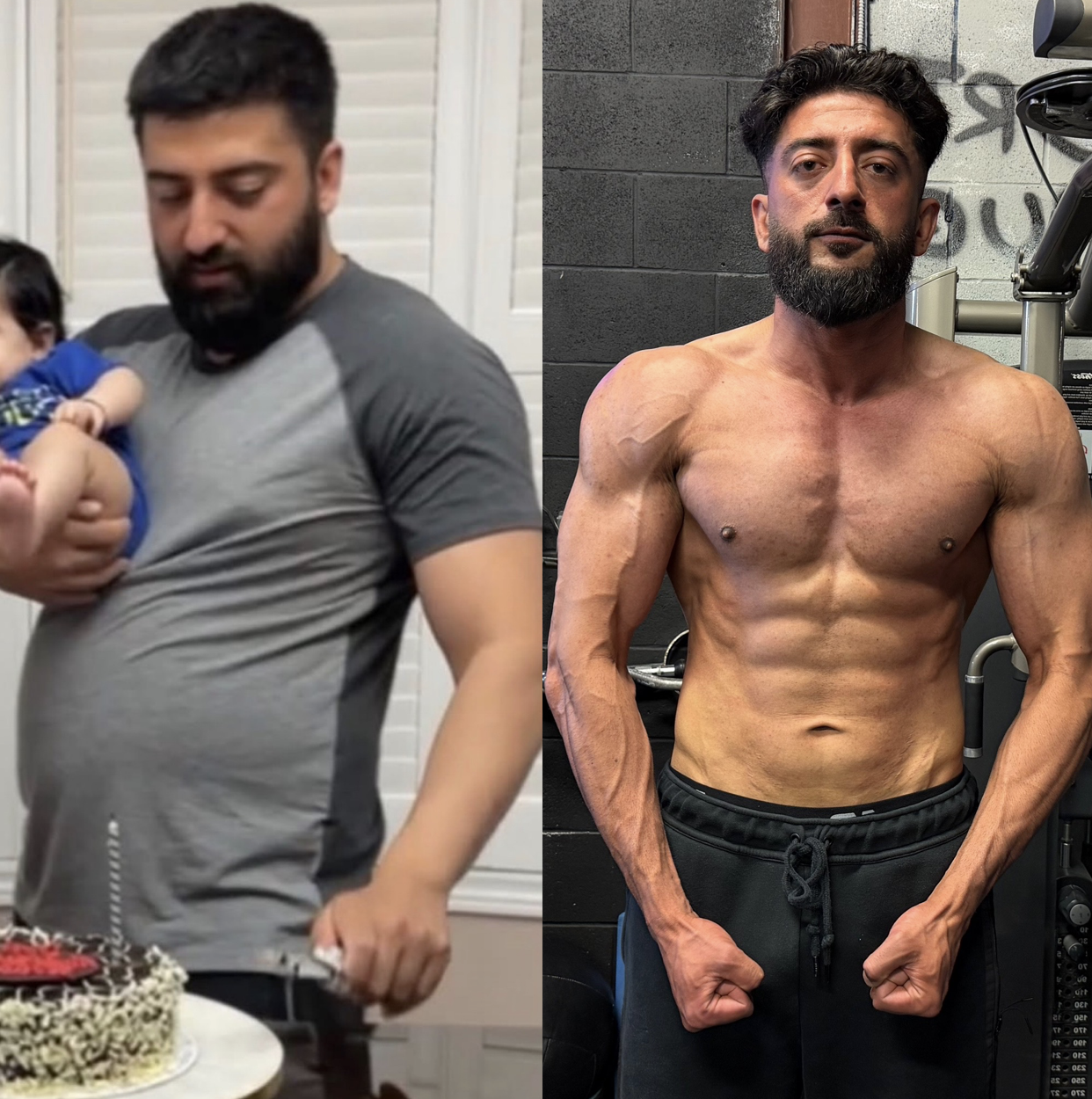
Here is what usually happens. You cut calories hard and add cardio. The scale drops quickly for three weeks, which feels like proof it is working. What it does not show you is that a meaningful share of that loss is muscle — and after 40 you were already losing muscle by default. You end the diet lighter, softer, and with a lower metabolic rate than you started with. Then the weight comes back onto a smaller engine, which is why each round is harder than the last.
The version that holds is slower and mostly unglamorous. You lift to protect the muscle you have. You eat enough protein to support it. You run a deficit small enough that you can hold it for months instead of weeks. Fat comes off at a rate that looks unimpressive on Instagram and turns out to still be gone a year later.
Why the scale is a poor scoreboard after 40
Two people can weigh the same and look nothing alike. When you train properly while losing fat, the scale moves slowly or stalls entirely for a fortnight while your waist keeps shrinking — because you are adding tissue that is denser than the tissue you are losing. Clients who only track weight quit during exactly that stall, three weeks before the visible change lands.
So we track four things: strength in the log book, tape measurements, photos in the same light every four weeks, and how clothes fit. Weight is the fifth, not the first. For a fuller breakdown of our fat-loss approach see our weight loss program page.
What a realistic rate looks like
For most of our over-40 clients, steady fat loss without losing strength lands somewhere around half a pound to one pound a week. That is unexciting on paper and it is roughly thirty to fifty pounds over a year, held, with more muscle at the end than at the start. Anyone promising faster is either selling you water weight or selling you the muscle you will miss at 60.
How we train people over 40 and over 50
Hammer Fitness is a private, appointment-only personal training gym on Progress Avenue in Scarborough. No open floor, no crowds, no queue for equipment, no membership.
Private 1-on-1
One coach, one client, the full session. Every rep watched, loads adjusted in real time, technique corrected before it becomes an injury. This is the fastest route for anyone returning after a long break or training around something that hurts.
Semi-private
Two to four people with one coach, each on their own written program. You get the coaching and the accountability at a lower cost per session. It works well for couples, friends and colleagues training at the same times each week.
Programming, not workouts
Your plan is written for your body, your history and the days you can actually train. It progresses week to week, and it is adjusted when life gets in the way rather than abandoned.
Nutrition you can hold
No elimination diets, no meal-replacement products, no 1,200-calorie crash. Enough protein to hold muscle, portions that fit your life, and a plan that survives a work dinner and a family weekend.
Personal training over 50 in Toronto
Training at 55 is not training at 42 with lighter weights. The priorities shift. Bone density starts to matter as much as body composition, particularly for women after menopause, and loaded resistance work is one of the few things that meaningfully influences it. Balance and single-leg strength move up the list, because the thing that ends independence at 80 is usually a fall, and the groundwork for not falling is laid decades earlier. Grip strength, unglamorous as it sounds, tracks closely with how well people do in later life.
So a personal trainer over 50 should be programming for how you want to move at 75, not just how you want to look at your daughter's wedding. Those two goals overlap more than people expect — the training that keeps you strong and mobile is the same training that changes your shape. But the order of priorities is different, and a program copied off a fitness app will have them backwards.
Our over-50 clients train on the same private floor as everyone else, most of them two or three times a week, in private 1-on-1 sessions or semi-private pairs. Many come to us from across Scarborough, North York and Markham.
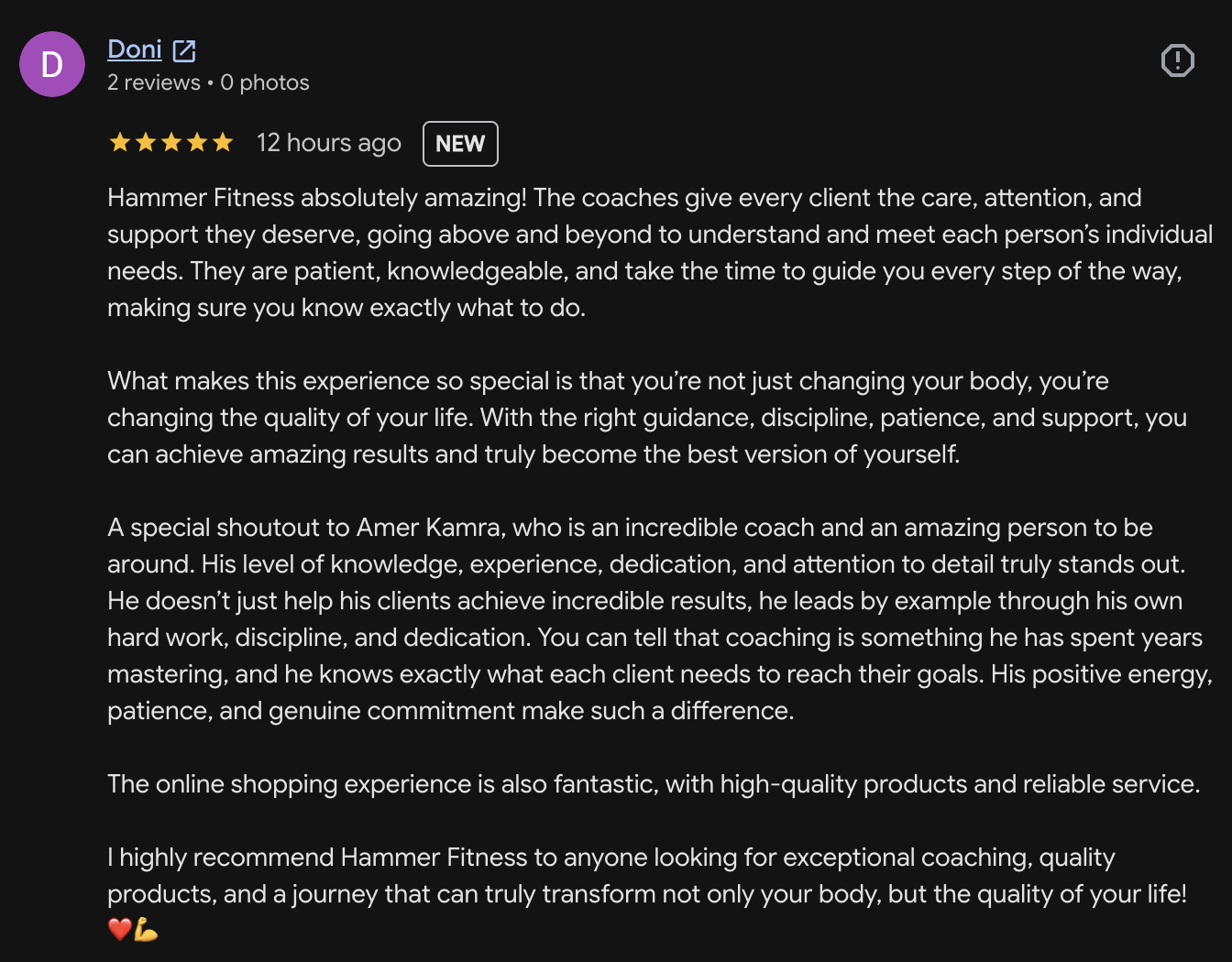
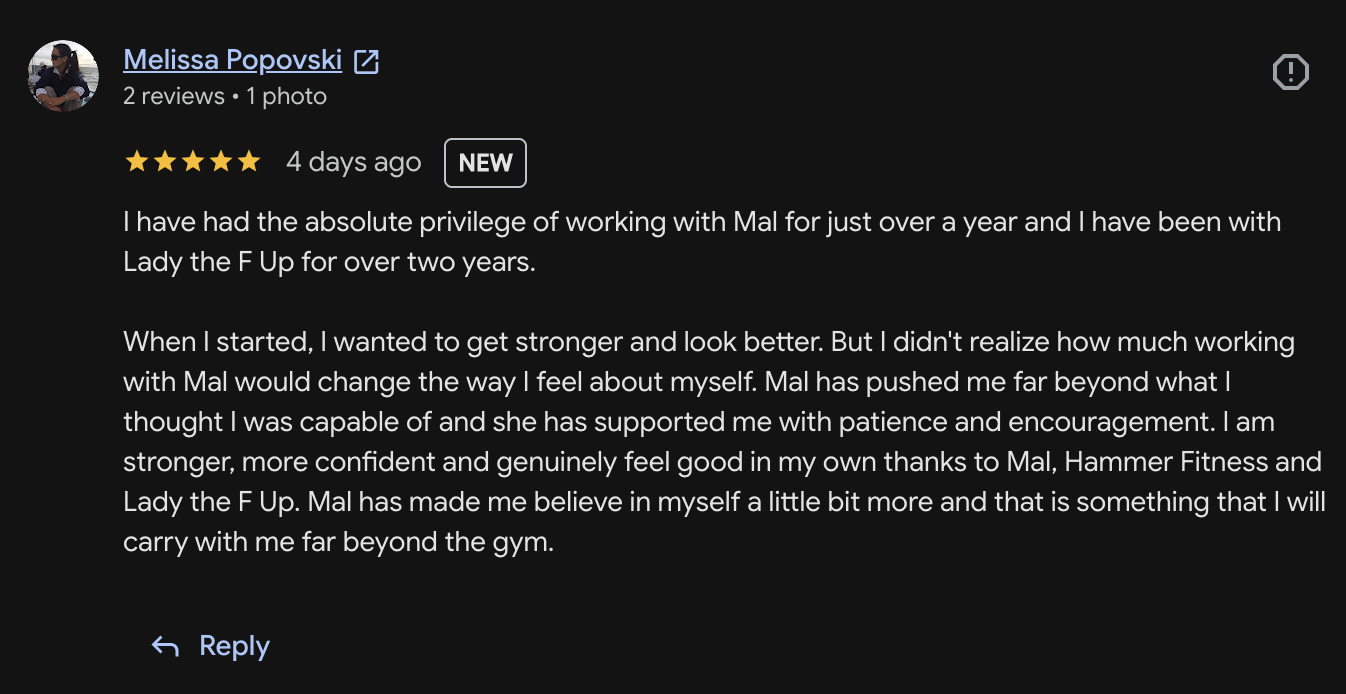
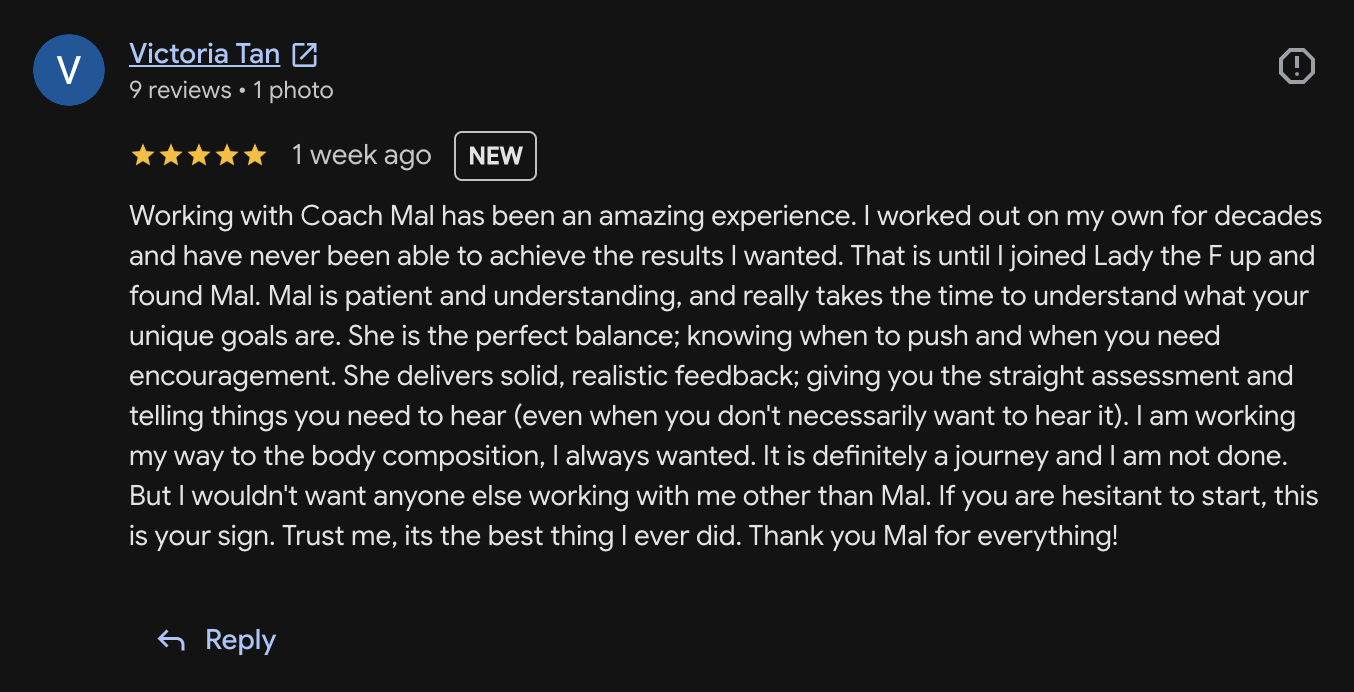
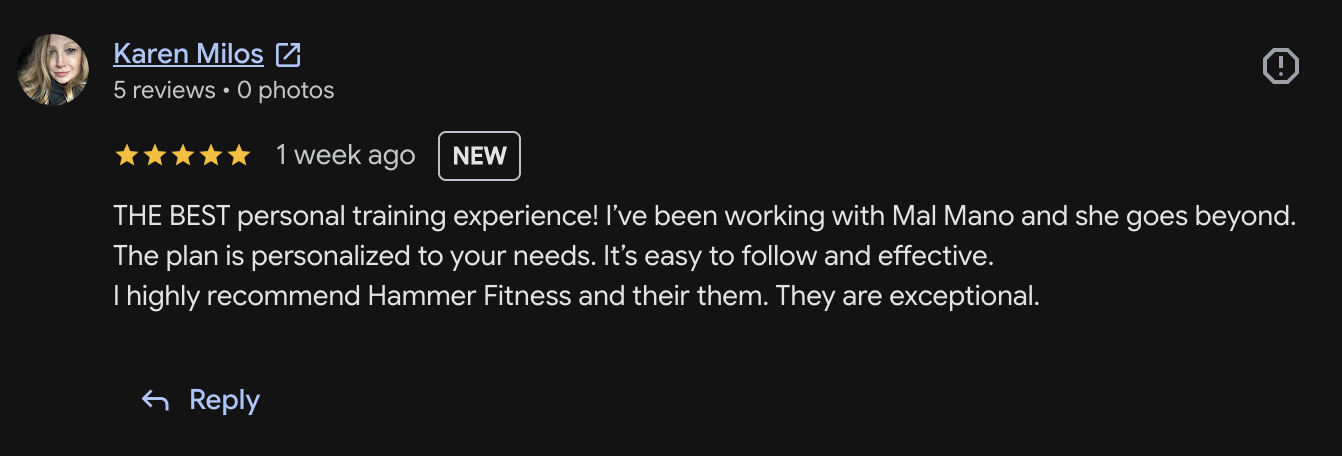
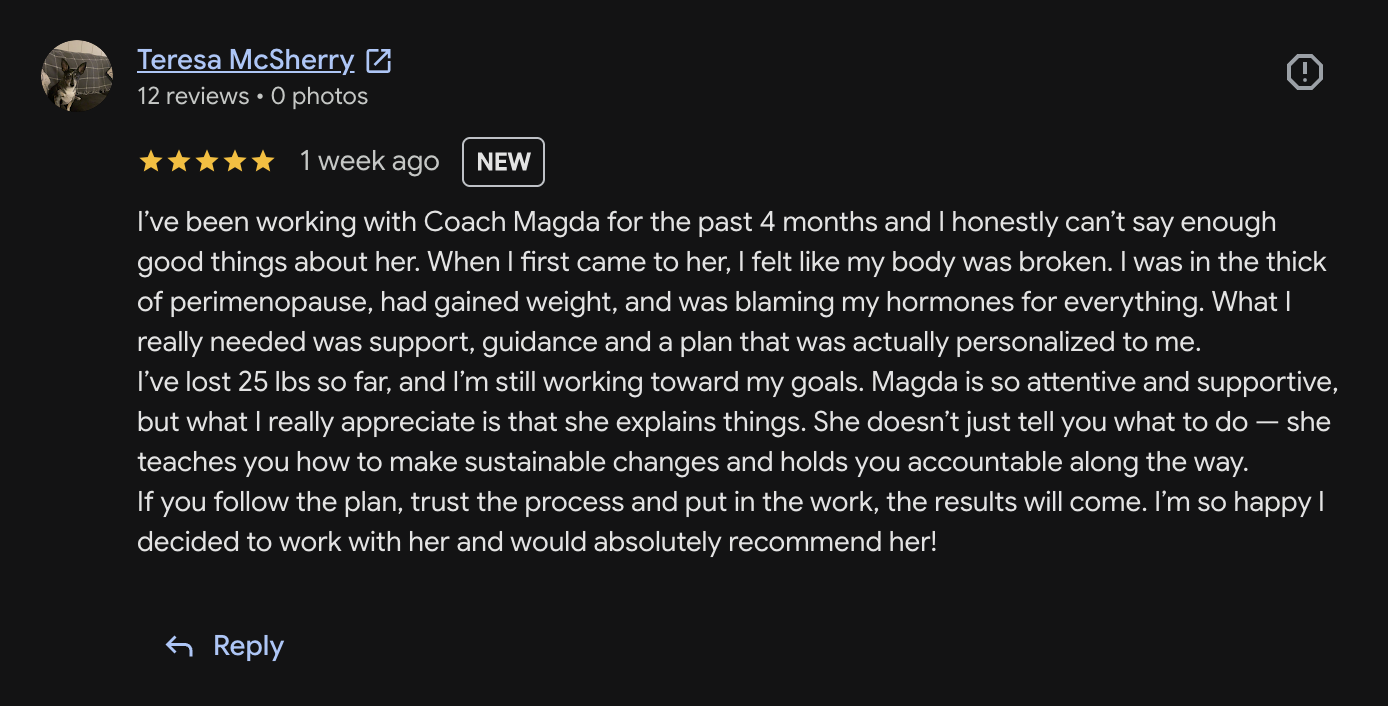
What clients say
Parents training before the house wakes up. Nurses, first responders and trades. People who have started over before and expect it not to work this time.




Your first 90 days
Free consultation
We sit down, go through your history, your injuries, what you have already tried and what your week actually looks like. No pressure, no commitment. If we are not the right fit we will say so.
Build the base
Learn the movements properly at loads that are well within reach. Establish three sessions a week that fit your calendar. Most people feel better and sleep better before the mirror changes.
Load starts climbing
Strength goes up noticeably. Clothes start fitting differently. This is usually where the scale and the mirror stop agreeing with each other, and where having a coach explain why matters.
It becomes normal
Training is in your week the way work is. Stairs are easier. You stop negotiating with yourself about going. This is the point most people never reach on their own, and it is the point that decides the next ten years.
Training over 40 in Toronto — what people ask
Am I too old to start?
No. Resistance training builds muscle and strength in adults well into their seventies and eighties, and the people who gain the most are usually the ones starting from the least. The relevant question is not your age, it is whether the program is written for the body you have now.
I have not trained in fifteen years. Where do we start?
At the beginning, with no judgement. A large share of our clients arrive after a long gap. The first four weeks are about learning the movements properly and building a schedule you can keep, not about proving anything.
I have a bad back and a shoulder that flares up. Can you still train me?
Usually yes. We program around what hurts and build the supporting tissue rather than pretending it is not there. What we do not do is diagnose or treat — if something needs a physiotherapist or a doctor, we will tell you plainly and work alongside them.
Is this different for women over 40?
The principles are the same: build and hold muscle, eat enough protein, progress gradually. What changes is context — the years around menopause often shift body composition and recovery even when habits have not changed, and the training and nutrition plan should account for that rather than blaming adherence.
Do you do weight loss coaching for people over 40?
Yes — it is the reason most of our over-40 clients walk in. Weight loss over 40 works differently from weight loss at 25: the priority is protecting muscle while fat comes off, because muscle is what holds your metabolic rate up. Our weight loss program page covers the approach in more detail.
Do you train clients over 50 and over 60?
Regularly. Training over 50 shifts the priorities toward bone density, balance, single-leg strength and grip, alongside body composition. The training still changes how you look — it is simply ordered around how you want to move in twenty years as well.
How do I find a personal trainer over 40 in Toronto who understands this?
Ask two questions before you sign anything. First, how will they program around your injury history. Second, what they track besides bodyweight. A personal trainer who cannot answer both is going to hand you a 25-year-old's program with lighter dumbbells on it.
How many days a week do I need?
Three is the number most of our over-40 clients settle on and sustain. Two well-run sessions a week done consistently for a year will beat six sessions a week abandoned in March.
Do I need a gym membership as well?
No. There is no membership at Hammer Fitness. You book sessions and train on a private floor by appointment. Nothing else to join.
What are your hours?
We are open 5am to 11pm, seven days a week, 365 days a year — including holidays. Early mornings before work and late evenings after the kids are down are two of our busiest windows.
What does it cost?
Rates depend on whether you train 1-on-1 or semi-private and how often you train. Current ranges, plus how Toronto rates compare across the market, are on our personal training cost page.
Where are you located?
Unit 7 – 21 Progress Avenue, Scarborough, Ontario M1P 4S8. Free parking on site, and we draw clients from across Scarborough, North York, Markham, Etobicoke and Durham. See our Scarborough personal training page for directions.
The next thirty years are decided now
Book a free consultation. We will go through your history, tell you honestly what is realistic, and you decide from there. No pressure, no commitment.
Open 5am–11pm, seven days a week, 365 days a year · info@hammerfitness.com